
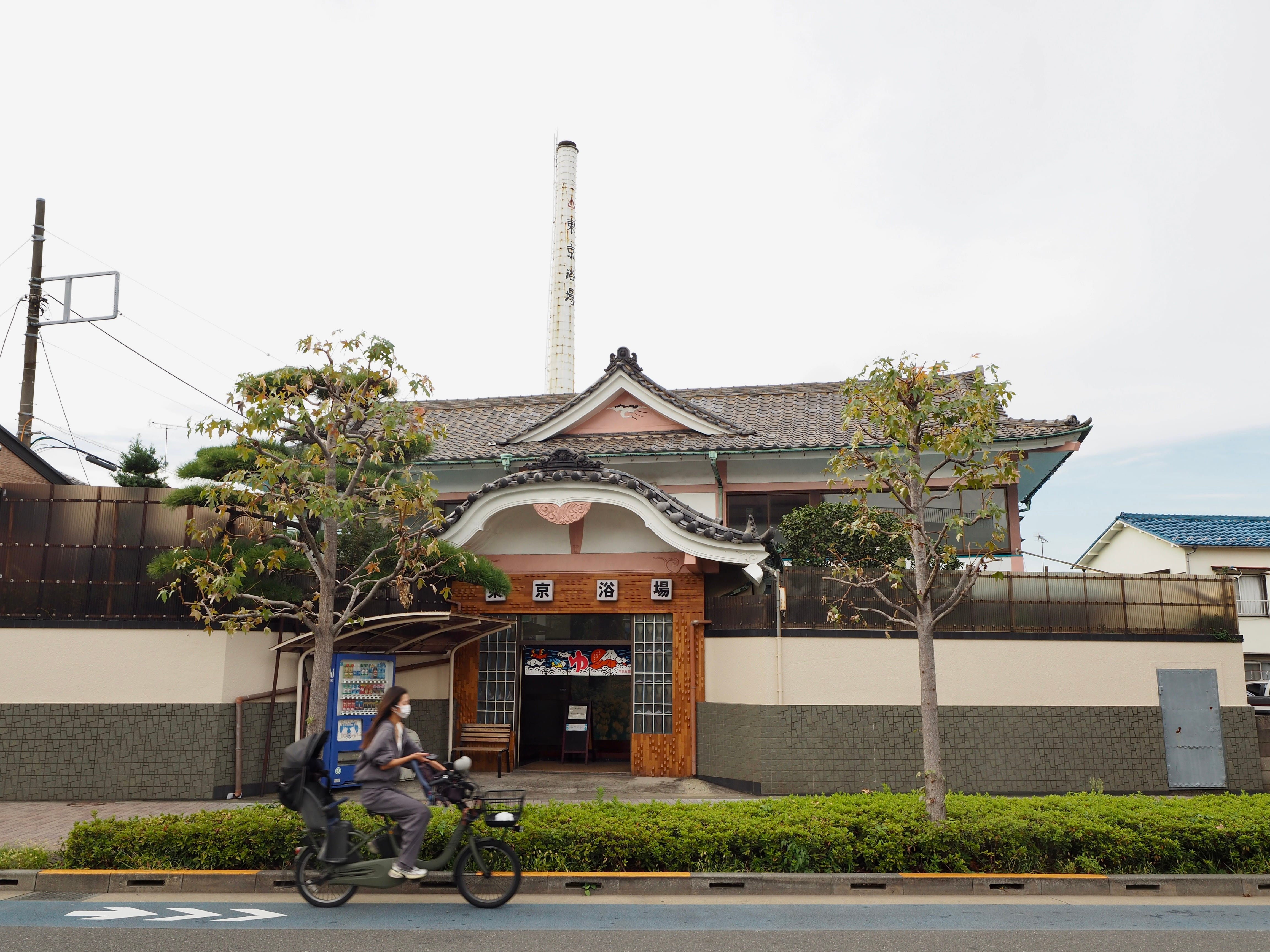
Happy New Year! Yesterday I woke up around 5:45 and biked through the near-freezing cold to Inari-yu Nagaya to serve amazake, a sweet rice drink, to about 60 of our neighbors after hatsuyu, the first morning bath of the year. In many ways, it’s my favorite day at the Nagaya—all the local folks basking in their post-bath warmth, no money being exchanged, just good vibes. It reminds me of why it’s worth building and sustaining an urban commons.
When I explain that I work on preserving sento, people in Tokyo sometimes respond by sharing that they love saunas. The distinction may appear to be about whether you prefer steam or hot water, but public baths and saunas function in very different ways within the city.1
Saunas were on my mind recently due to a terrible tragedy that occurred on December 15 at a sauna in Akasaka, just down the street from Tokyo Little House. A husband and wife in their mid-30s died after becoming trapped inside a private sauna room where a fire broke out. The news reported several glaring safety issues—the sauna door had a knob instead of being always pushable, and the management had apparently never turned on the SOS receiver in the office. The owners are now being investigated for negligence.
The day after the tragedy, my barber mentioned a detail that I hadn’t heard on the evening news. The sauna in question was a luxury establishment that cost ¥19,000 ($120) per visit and had a top monthly membership fee of ¥390,000—$2,500, or more than the average take-home pay for a Tokyo worker in their early 30s.
In contrast, every sento in Tokyo will cost you ¥550—public baths are the last service still subject to price controls that are intended to ensure universal access. It is not hard to guess which style of operation is more aligned with the ways of the modern city. For the last five years or so, the media has regularly covered the sauna boom as a growing youth consumer trend. One popular site lists around 200 in Tokyo, which means they are closing in on sento, whose numbers have dwindled from around 2,800 in the 1960s to a little more than 400 today. A search for sauna shows at least ten in Akasaka, which hasn’t had a sento since the 1980s (the distinction is lost on Google Maps, where they appear with the same symbol).
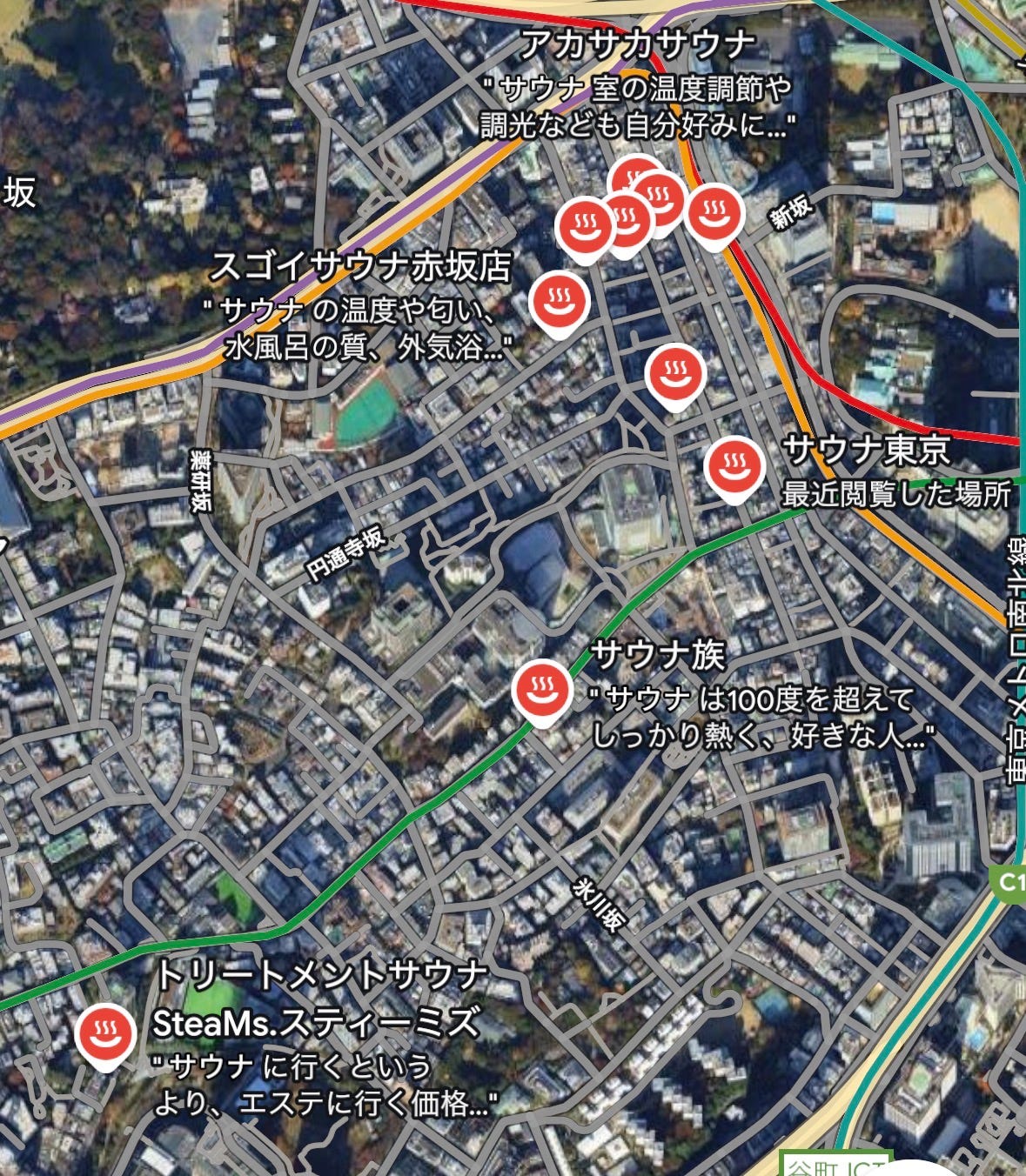
Akasaka is the kind of Tokyo neighborhood where one would expect a high concentration of saunas: lots of young, highly paid workers in media, finance, and other industries putting in long hours at the office and hanging out near their workplaces till late at night. It is also at the center of a consumer culture in Minato Ward that prizes luxury and exclusivity—sure enough, Minato’s saunas are the most expensive in Tokyo, averaging ¥6,375 per visit. Tokyo’s saunas thus adhere to the logic of other categories of consumer services in the city, differentiated by price and features to appeal to particular market segments.
Someone with a different idea of what makes a good city may read this and think, what’s the problem? Sophisticated markets offering an array of consumer choices are a sign of a rich society, we’ve replaced what used to be a necessary inconvenience with a variety of better options. Sauna and “super sento” spas often have a range of services—cold baths, cool-off rooms with fancy massage chairs, private spaces, and post-sauna food and drinks—that simple sento do not. Surely, most of the tenement dwellers who occupied the city when the sento were built would trade the living conditions of their city for the modern city in a heartbeat.
Yet the triumph of saunas and other market-driven spaces is what makes sento and other surviving commons so valuable in modern Tokyo. Sento are convivial community spaces where we don’t just purchase rejuvenation, but shed the acquired attributes of our consumer choices to be naked among our neighbors—everyone from small children still learning the rules of life to the old and feeble.2
I have nothing against saunas, nor people who have different consumer habits from me. But I am interested in how Japanese sauna culture—and the global wellness industry in general—seems to be complementary to burnout culture. Here is how the sauna where the tragedy occurred describes itself on its website.
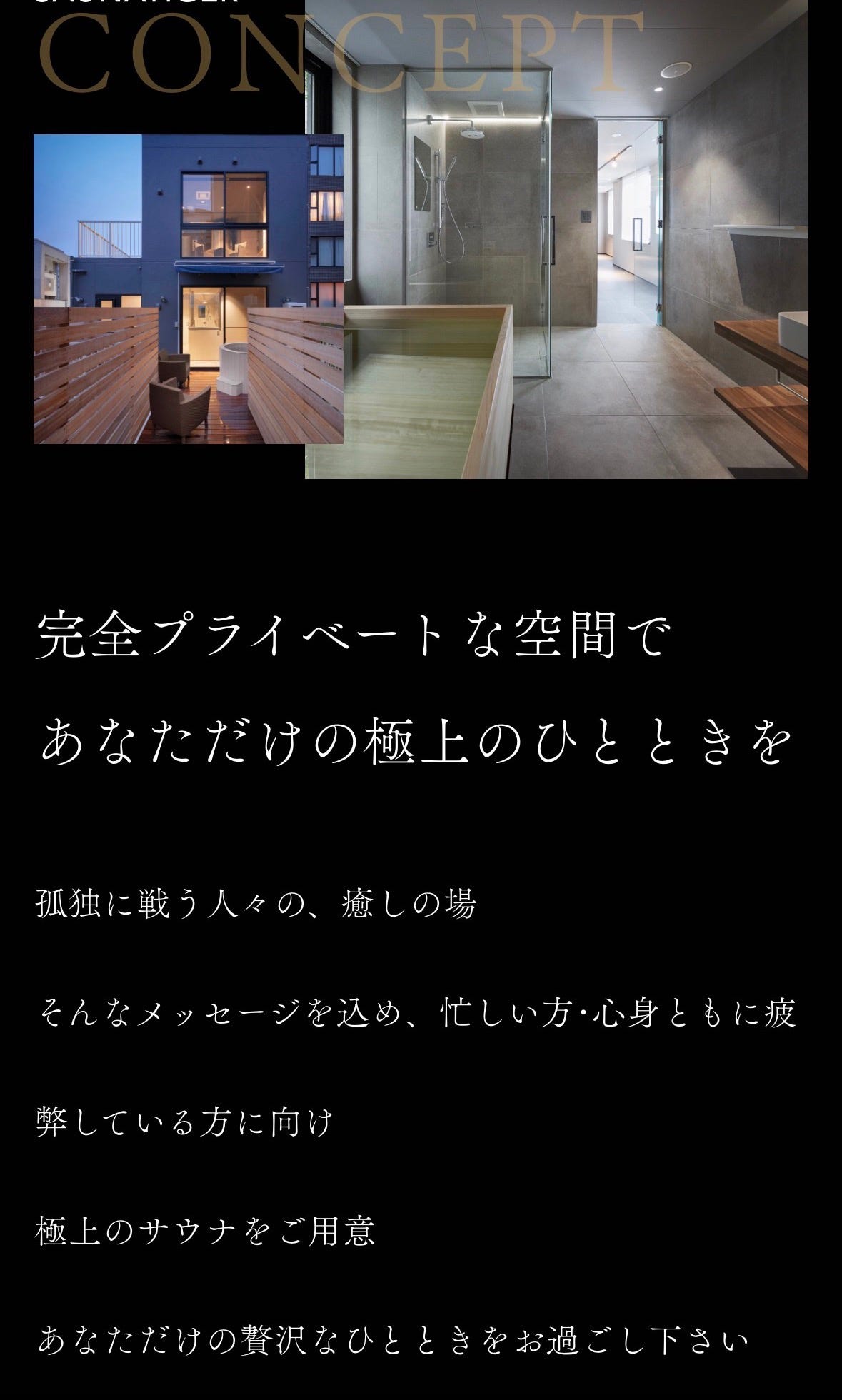
In a fully private space, a moment of perfection for you alone
A healing place for people who battle in solitude.
We have distilled that wish into the ultimate sauna for those who are busy, and mentally and physically exhausted.
Appreciate a moment of luxury just for you.
Society is presented as a dystopian battlefield of overwork and isolation; the luxury sauna is the antidote, accessible to those who have put in the hours and earned enough money to purchase momentary escape. Burnout and rejuvenate, rinse and repeat. The key word in Japanese sauna culture is “totonou,” a verb that means to become ordered, and in this context refers to cycling between the sauna and cold bath or outside air to achieve the desired effect of mental and physical rejuvenation. My own urbanist notion of “totonou” is less individual and bodily than communal and social. I draw energy from feeling myself as dividual, part of the circular social rhythms at the sento, and opening myself to experience the neighborhood in between bath and home.
In this day and age, creating a new establishment in the city usually means answering the market, and so the city shifts more and more towards touristic and consumptive modes of organizing space. I simply believe that a healthy city also needs other forms of social bonds, and trying to protect the sento that remain and cultivate an urban culture that values and sustains them is one way of putting energy towards that end. Perhaps one day the winds will change, but in the short-term at least, our task is mostly playing defense.
The tragedy at the private sauna brought to mind another incident that happened a year ago. An elderly woman who bathes at Inari-yu every day didn’t show up at the usual hour. The concerned bathhouse owner later walked over to her house to figure out what was the matter. Calling out, a faint response came from inside. She was sick with the flu, and couldn’t get up to unlock the door. The fire department was called, entered the house through a second-floor window and took her to the hospital for treatment.
Yesterday, she came to the Nagaya with her friend after bathing. It was too crowded inside for her to bring in her walker, so I took a chair and a hot cup of amazake outside for her. “The bath was much busier than usual, like the old days,” she said as she carefully lowered herself to sit. Across the alley, the hair salon where she and her friends used to gather had become a new house in 2025. Heading into a new year and an uncertain future for human relations, I felt thankful to the city for the chance to be part of a place, and to do something nice for my neighbors.
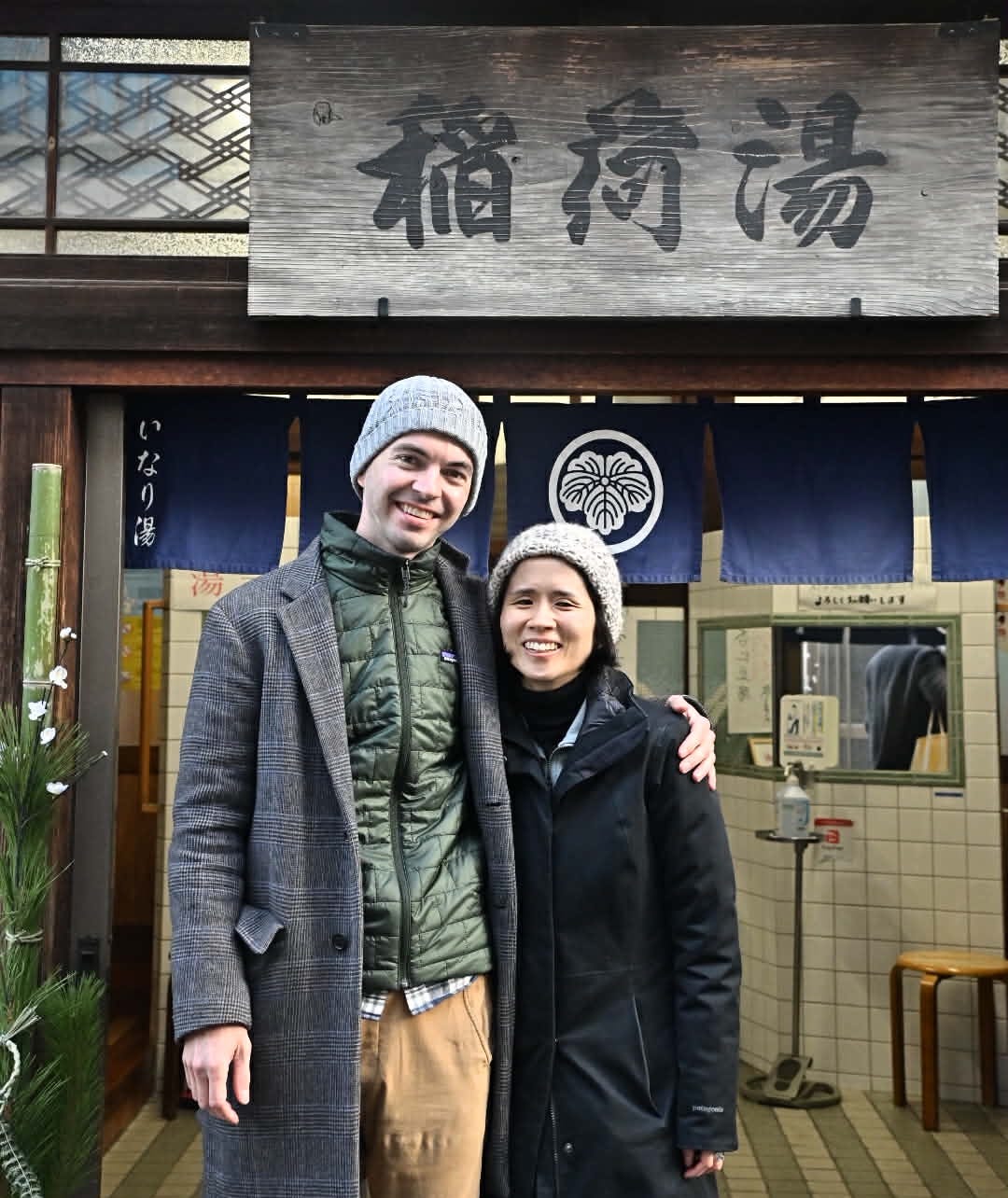
There is overlap between sento and sauna, as some sento have small saunas inside. How these spaces function varies. Some are old school places with a free (or out of service) little sauna in the corner, other more recently renovated ones may put saunas at the center of the experience and attract a clientele of enthusiasts who pay extra and line up in the lobby for timed entry.
The appeal of private sauna is about being alone, except in one important respect that I realized after looking at the Instagram mentions of the sauna where the fire took place: by allowing customers to bring their smartphones inside, some private saunas let people perform their best, most attractive selves for social media. One of the great benefits of sento, I believe, is that they are among the last digital-free spaces in the city.
This really moved me. I love how you describe sento not as something to consume, but as a place to belong. When I last visited Japan, I made it a point to visit sento and onsen whenever I could—both the everyday ¥550 neighborhood baths and the more “luxurious” ones around ¥1,500. The difference was clearly visible, but what stayed with me was that both had their own kind of warmth.
Your reflection helped me understand why. The sento warmth came not just from the water, but from the quiet sense of community and shared presence. The contrast you draw between commons and consumer spaces really resonated, especially the story of the elderly woman. Thank you for such a grounding and humane New Year reflection.
Redevelopment, gentrification, elitist consumerism, replacing old neighborhoods with high-rise condos and mix-use glass-and-concrete monsters... I hope this is not the end of Tokyo.